Artistic institution / Andrea Melloni
Cubificio
Cubificio is a project by Andrea Melloni structured as a research institution devoted to organisms with cuboidal forms. Creatures, habitats and behaviours take shape through sculpture, installation, drawing, video, sound and documents. Each project contributes to studying and bearing witness to their existence.
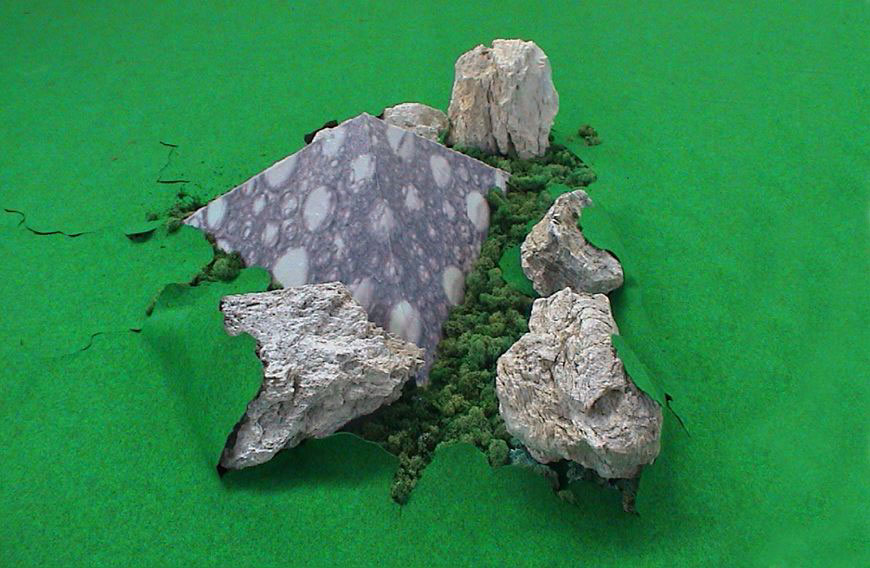
Amellonia Cubitaria
Forms, varieties, environments.
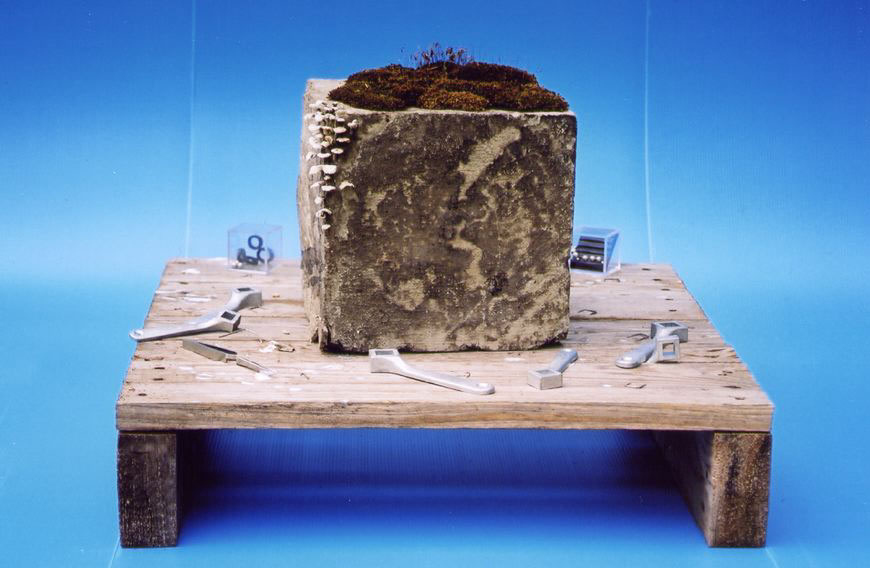
Polycubo Amellario
Proliferation and transformations of matter.
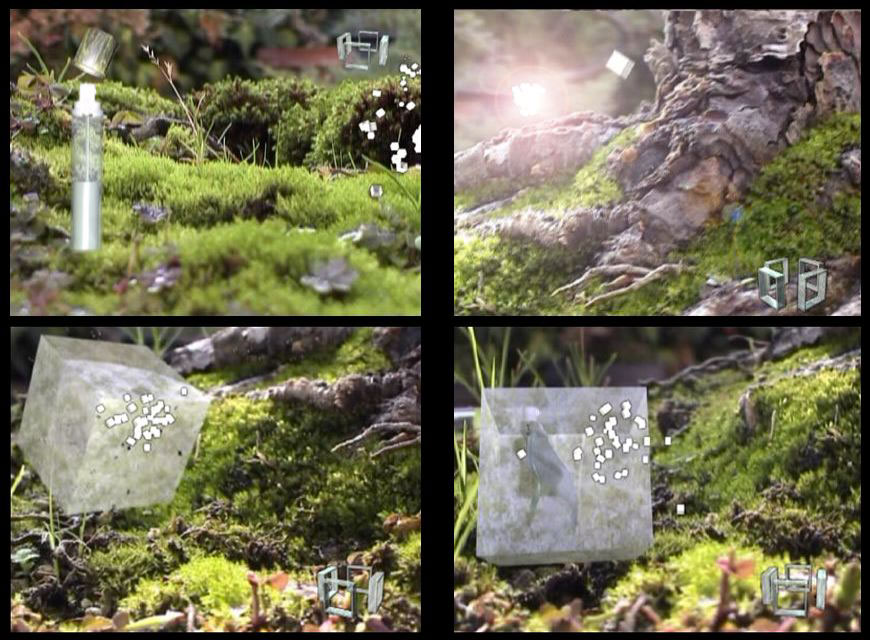
Cubide Amellare
Collective behaviour and habitats.
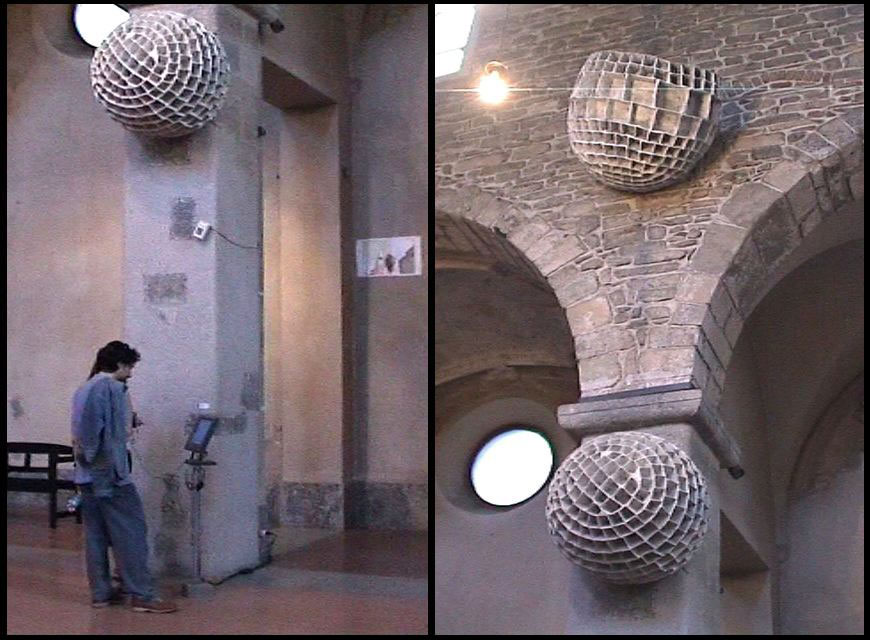
Cubocephalus Alacris
The body as a measure of time.
Method
Collecting, observing,
bearing witness.
The research develops through collecting samples, classification, observation and the construction of environments. Materials from the artist’s body become part of certain organisms; the time required to gather them contributes to the making of the work.
Cubificio adopts the language and communication formats of the biological and social sciences. Specimens, nomenclatures, audiovisual narratives and installations form an artistic enquiry in which fiction and instruments of knowledge work together.
The mission dates the institution’s founding to 2001; the web platform was launched in 2003.
Beyond classification
Stem cells project investigates the matrix of cubic life. Slow eye movements shifts the enquiry towards perception.
The Cubificio missionHistorical text by the artist · English translation
Cubificio’s mission is to investigate and study the existence, structure and behaviour of a specific group of creatures, using the tools available to contemporary scientific research.
The creatures discovered, classified and monitored share parasitic behaviour, in some cases highly socialised, and an unmistakably cuboidal morphology. This combination of traits distinguishes them from most living beings.
Through ongoing fieldwork, new life forms are discovered and classified, while new information about creatures already known to us is collected and archived.
Cubificio, based in Berlin since 2002, was founded as an institution in 2001, in a context that linked it from the outset to social disciplines and the machinery of war. Its first immediate practical result was its founder’s exemption from compulsory military service. Since then, many of the technologies and studies involved have drawn on warfare-related patents, comparative research into socially debilitating genetic disorders, and a critical examination of the management of scientific discoveries.
Cubificio is a dynamic structure that frequently works with external collaborators. It is organised into departments established to investigate the key aspects of these beings, periodically gathering and disseminating the results.
Cubificio engages with current scientific research through continual updating and a network linking it with other research centres in biotechnology and genetic engineering.
Much of the activity consists of investigating and collecting samples of organic substances that form the bodies of the specimens under observation: epoxy resins combined, depending on the species, with skin, saliva, urine, nails and other materials. These activities require dedication and sustained daily commitment.
Results, archived and classified according to the organism examined, are disseminated in various forms: documentary videos and web publications; specimens and findings presented in multimedia scientific displays; in vitro reproductions of controlled environments in which study specimens proliferate; and synoptic charts recording ongoing progress.
As results have accumulated over time, significant connections have emerged between these beings and the human species, with which they maintain a symbiotic relationship, most often expressed through highly socialised parasitic behaviour. It is no coincidence that the investigative methods are largely borrowed from the social sciences normally applied to human communities. Disciplines such as ekistics, the study of emergent systems, and phenomena such as stigmergy can be observed alike in human communities, colonies of Cubide Amellare and infestations of Polycubo Amellario.
One example is the Cubocephalus alacris project, for which the sustained collection of nail samples to form the bodies of the 500 Cubocephalus produced so far continued throughout 2003.
Another case study, begun in 2000, is the Cubide Amellare project: a parasitic animal with highly socialised behaviour, whose body is partly composed of my dermis. Gathering the pieces of skin that make up the macroscopic image of a typical cubide, and the epoxy core of the many cubidi subsequently produced, followed the rhythm of my skin’s regeneration over several months.
As results accumulate over time, a pattern emerges that links these cuboidal avatars. The profile revealed by connecting the various research projects suggests a common origin for these symbiotic organisms.
Following the study of Amellonia Cubitaria, Polycubo Amellario, Cubide Amellare and Cubocephalus Alacris, future research will investigate Cubiceps Paradoxus, a particularly unusual aquatic organism.